

The Cable and the Cloud: What Britain's Telegraph Monopoly Tells Us About AI Power
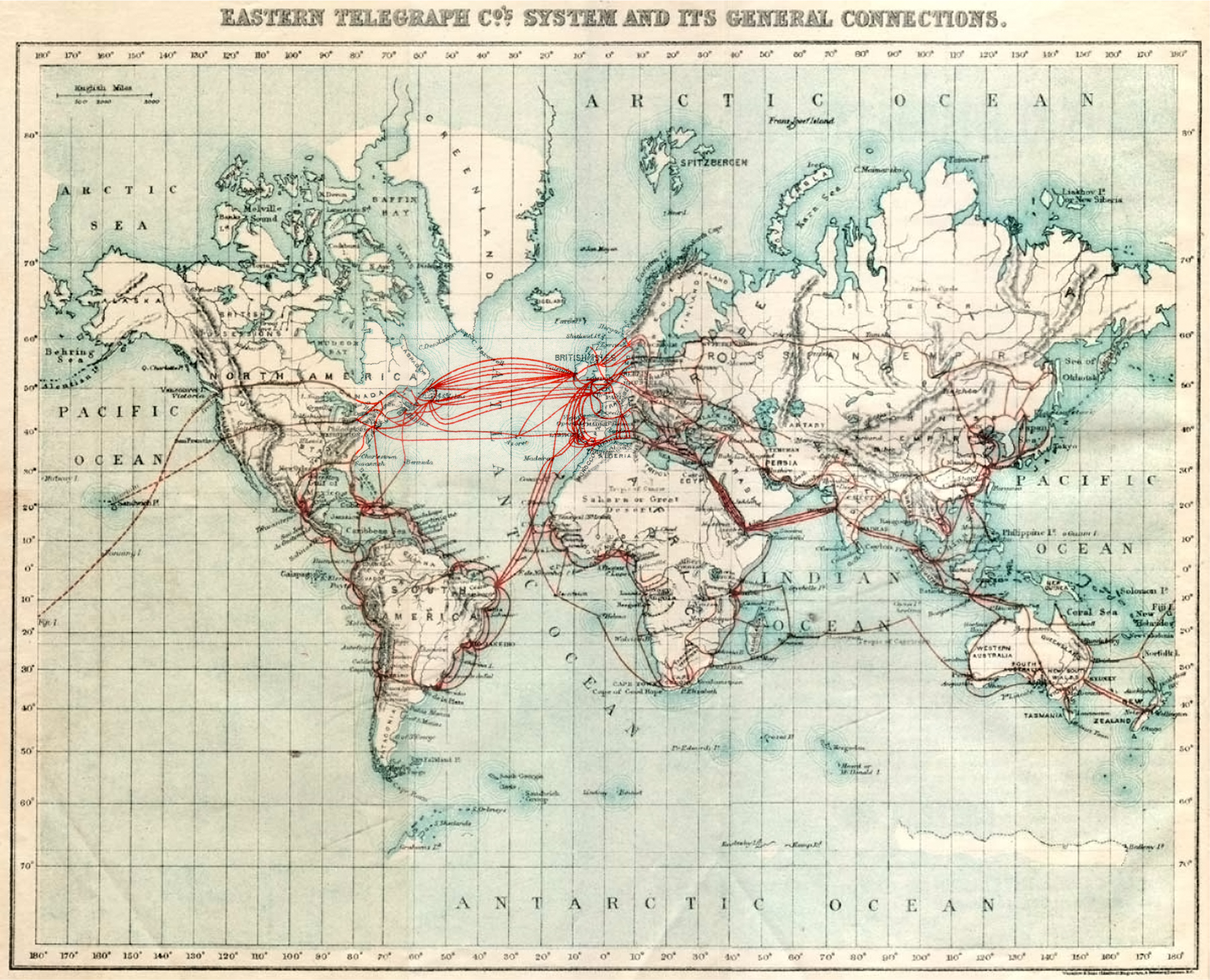
Eastern Telegraph Company's global cable network, 1901. Source: Eastern Telegraph Company (1901), public domain, via Wikimedia Commons.
Noetic AI Essays | NAI-ES-001
Author: Zoi Roupakia
Correspondence:zoi.roupakia@noeticai.co
Overview
On 5 August 1914, Britain severed Germany's transatlantic telegraph cables, forcing German communications onto routes that could be monitored and intercepted. The episode is often remembered as a wartime operation. In reality, it reflected decades of infrastructure dominance.
At its peak, British firms controlled most of the world's submarine cable network. That control extended beyond the cables themselves to the materials, expertise, protocols and institutions that governed global communications. Infrastructure became a source of economic, political and strategic power.
Today, a similar concentration is emerging within the AI stack.
This essay examines what Britain's nineteenth-century telegraph monopoly can teach us about AI infrastructure, sovereignty and technological dependency. Interdependence is unavoidable. What matters is whether countries retain credible alternatives if access to critical technologies is withdrawn.
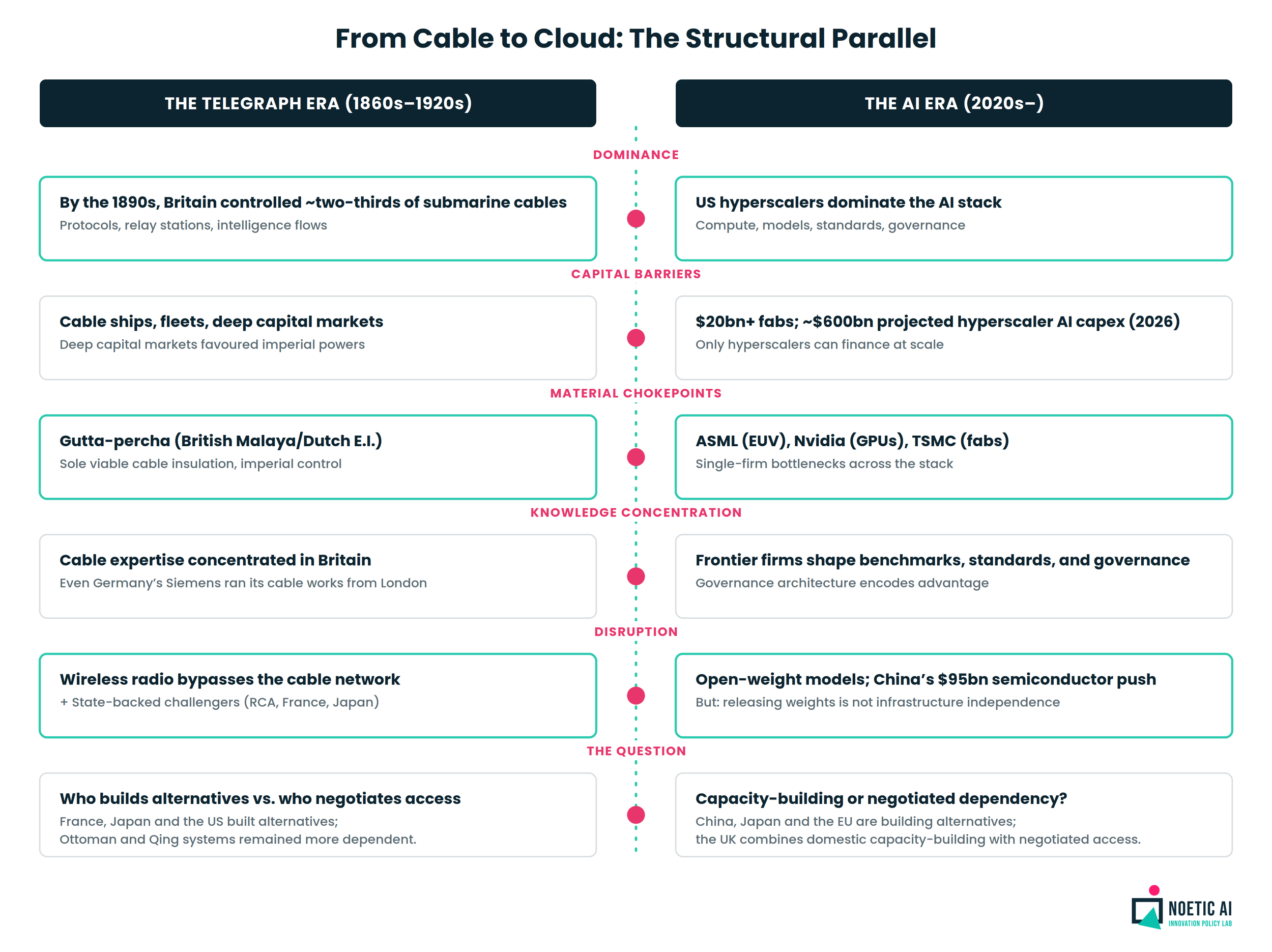
Figure 1. Roupakia, Zoi (2026). From Cable to Cloud: The Structural Parallel. Author’s analysis.
Drawing on historical evidence from Britain, France, Germany, the United States, Japan and China, the essay sets out a test for when interdependence is genuinely strategic rather than merely dependent, a condition it calls negotiated dependency: where reliance on external infrastructure is presented as autonomy despite the absence of a credible fallback.
The analysis explores the parallels between telegraph-era infrastructure concentration and contemporary AI ecosystems, including capital barriers, material chokepoints, knowledge concentration and the growing influence of frontier AI firms over technical and governance standards.
Key Questions
What can Britain’s telegraph monopoly teach us about contemporary AI concentration?
How does control of infrastructure translate into strategic and economic power?
Why might dependence on AI be harder to escape than dependencies in earlier industrial eras?
What distinguishes managed interdependence from negotiated dependency?
Can countries build meaningful AI sovereignty without controlling key parts of the AI stack?
Suggested Citation
Roupakia, Zoi (2026). The Cable and the Cloud: What Britain's Telegraph Monopoly Tells Us About AI Power. Noetic AI Essays, NAI-ES-001. Cambridge: Noetic AI.