

Reflections from AI for Good and WSIS 2026
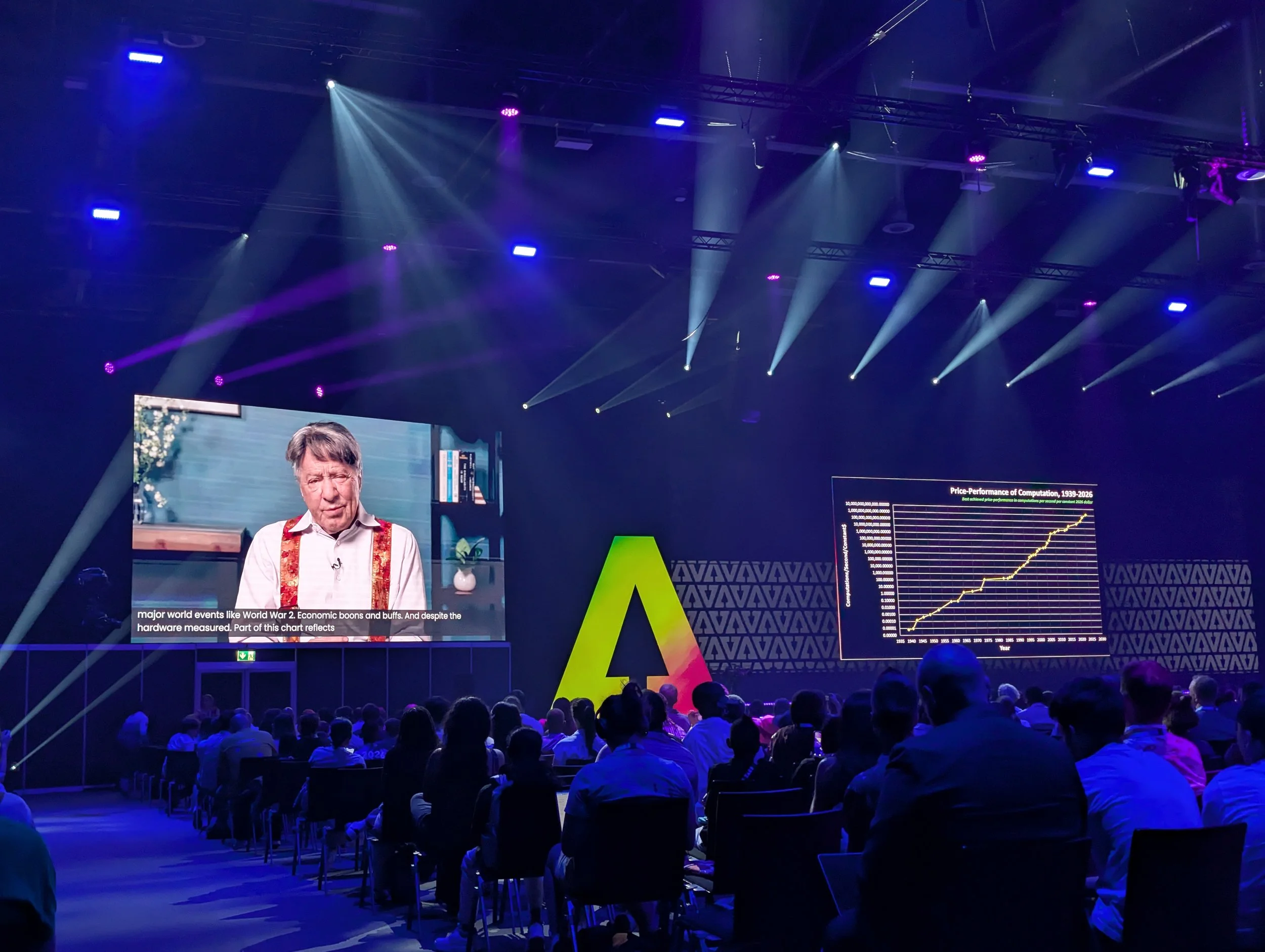
Noetic AI participated in this year's AI for Good Global Summit and WSIS Forum in Geneva, bringing together governments, international organisations, industry, researchers and civil society to discuss the future of artificial intelligence and digital governance.
Founder and Director Zoi Roupakia attended the summit and related side events, participating in discussions on AI infrastructure, industrial adoption, standards and governance alongside policymakers, researchers and industry leaders.
Across four days of events organised by the International Telecommunication Union (ITU), the WSIS Process Forum and the United Nations' Global Dialogue on AI Governance, several themes emerged repeatedly: who controls compute, how AI capabilities diffuse beyond frontier laboratories, what institutions enable deployment at scale, and who participates in shaping the rules that govern digital systems.
The week unfolded against the backdrop of the Independent International Scientific Panel on AI, whose preliminary report, released on 1 July, informed the inaugural Global Dialogue on AI Governance. The report's central warning is that current safeguards cannot keep pace with the growth of AI's capabilities. At its launch, the Secretary-General put the governance stakes plainly: the more AI advances without shared rules, the less say governments and people will have in the outcome. For states outside the frontier, that observation has an important structural dimension, which ran through many of the discussions in Geneva.
Compute, infrastructure and sovereignty
Discussions on open hardware and access to frontier AI highlighted how the rapid expansion of open-source models has not eliminated structural dependencies within the AI ecosystem. Access to advanced chips, cloud infrastructure and energy resources remains highly concentrated, raising important questions about technological sovereignty and resilience.
Speakers across the summit emphasised that AI governance increasingly extends to the physical and institutional infrastructure that supports models, as much as to the models and algorithms themselves.
From commitments to industrial deployment
Similar questions emerged during sessions organised by UNIDO and AIM Global on industrial AI adoption, which brought together representatives from international organisations, industry and academia.
Discussions stressed that successful deployment depends on much more than technological capability alone. Connectivity, skills, testing frameworks and public institutions all influence whether AI becomes embedded across economies or remains concentrated among a small number of firms and countries. Translating AI commitments into industrial transformation requires coordinated ecosystems involving governments, industry, academia and international organisations.
Standards, representation and governance
Sessions on technical standards and women's leadership underscored the growing importance of representation in AI governance. As standards increasingly shape the development and deployment of AI systems, participation in the institutions that design them becomes an important source of influence.
The discussions highlighted the importance of representation in the bodies that develop technical standards and governance frameworks.
Continuing the conversation
Alongside the main programme, Zoi Roupakia participated in side events, including the Lady Justice Initiative's AI for Breakfast Global Circle for Women at Trust Valley, and met with colleagues from the Center for AI and Digital Policy and the wider AI governance community.
Reflecting on the week, Zoi Roupakia, Founder and Director of Noetic AI, said:
“Geneva was a reminder that the debate about AI has moved well beyond the models themselves. The questions that matter now are about compute, energy, standards and institutions, and about who has a say in how they are shaped. Access to AI is widening, but influence over the infrastructure and standards that define it remains concentrated. For states outside the frontier, the task is to build the industrial and institutional capacity that turns access into genuine influence, before those terms are settled without them.”
For Noetic AI, the week highlighted a broader challenge facing governments around the world. States are increasingly asked to help govern systems they do not originate and cannot yet build at scale. The binding constraint is structural rather than regulatory, resting on compute, capital, model access and standards influence, resources that remain unevenly distributed.
Noetic AI is an independent AI and emerging technology policy intelligence lab and advisory practice based in Cambridge, working at the intersection of governance, innovation and responsible technology adoption. noeticai.co