

Noetic AI publishes new research on women, AI, and the future of work in UK manufacturing, commissioned by Beko UK and Ireland
Women account for 63.4% of employment in UK manufacturing's most GenAI-exposed occupations, new Noetic AI research finds. Original survey of 890 manufacturing professionals finds similar AI use among women and men but significant differences in concerns about pay, wellbeing and opportunity
The Default Setting: Women, AI, and the Future of Work in UK Manufacturing, commissioned by Beko UK and Ireland, calls on manufacturers to involve women in AI adoption while choices are still open.
Cambridge, 5 October 2026.
Women make up 27.8% of the UK manufacturing workforce but 63.4% of employment in the occupations most exposed to generative AI. In an original Noetic AI survey of 890 manufacturing professionals, women and men use AI at similar rates, but women are more concerned about its effects on pay, job opportunities and wellbeing. These are among the findings of a report published today by Noetic AI, an independent AI policy lab based in Cambridge.
The Default Setting: Women, AI, and the Future of Work in UK Manufacturing was commissioned by Beko UK and Ireland and prepared independently by Noetic AI. It combines an analysis of International Labour Organization occupational exposure data with Office for National Statistics employment data, an original survey of 890 UK manufacturing professionals, and a review of international evidence on AI, gender, and work.
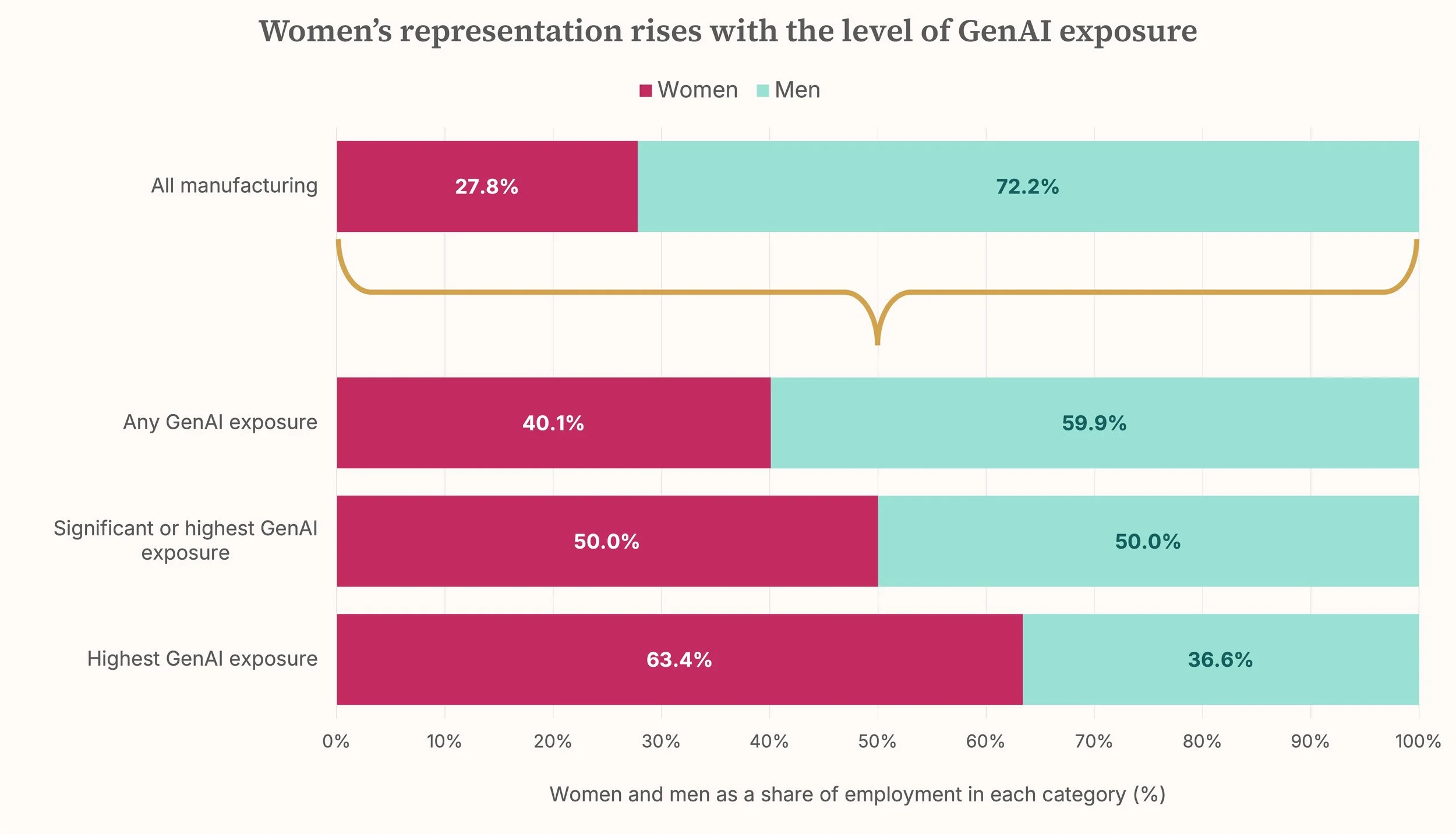
Figure 1: Women's share of UK manufacturing employment, by level of GenAI exposure
Note: “Any GenAI exposure” includes occupations classified by the ILO as having low, moderate, significant, or highest GenAI exposure. Women and men total 100% within each row. The first row shows the baseline composition of UK manufacturing employment; the three rows below progressively restrict the population to GenAI-exposed occupations.
Source: Author’s analysis of ONS Annual Population Survey four-digit SOC2020 occupation by four-digit SIC 2007 industry data, April 2025–March 2026, scaled within SOC major groups to ONS Annual Population Survey workplace analysis T10c via Nomis, January–December 2025, UK manufacturing (SIC 2007 Section C), by SOC2020 major group and sex; ONS SOC2020 coding index (December 2025); and ILO exposure classifications from Gmyrek, P. et al. (2025). Generative AI and Jobs: A Refined Global Index of Occupational Exposure, ILO Working Paper, 140, Annex Table A1.
Key findings include:
Exposure: 41.1% of women's manufacturing employment is in occupations exposed to generative AI, compared with 23.6% of men's. Exposure indicates that tasks could change. It does not predict job loss.
Concern: Women and men surveyed use AI at similar rates, but women are more likely to believe AI bias harms pay or job opportunities (33.3% vs 22.9%) and wellbeing (41.1% vs 28.7%). These differences hold after accounting for occupational role, company size, age, and AI use and expertise.
Young women: Women aged 22 to 29 are almost as concerned about AI and unequal pay as women in their fifties, despite a much smaller pay gap at that age.
Trust: 32.1% of women trust AI-driven decisions, compared with 42.9% of men.
Trust and preparedness: Where respondents think their company is preparing well for AI bias, trust in AI-driven decisions rises, from around a quarter of women and a third of men to over 40% and 50%. Concern about pay and job opportunities does not fall; it stays at around a third of women and just under a quarter of men.
Organisational action: 58% of respondents are not aware of any action their employer is taking on AI bias, while 87% want AI systems to be more transparent.
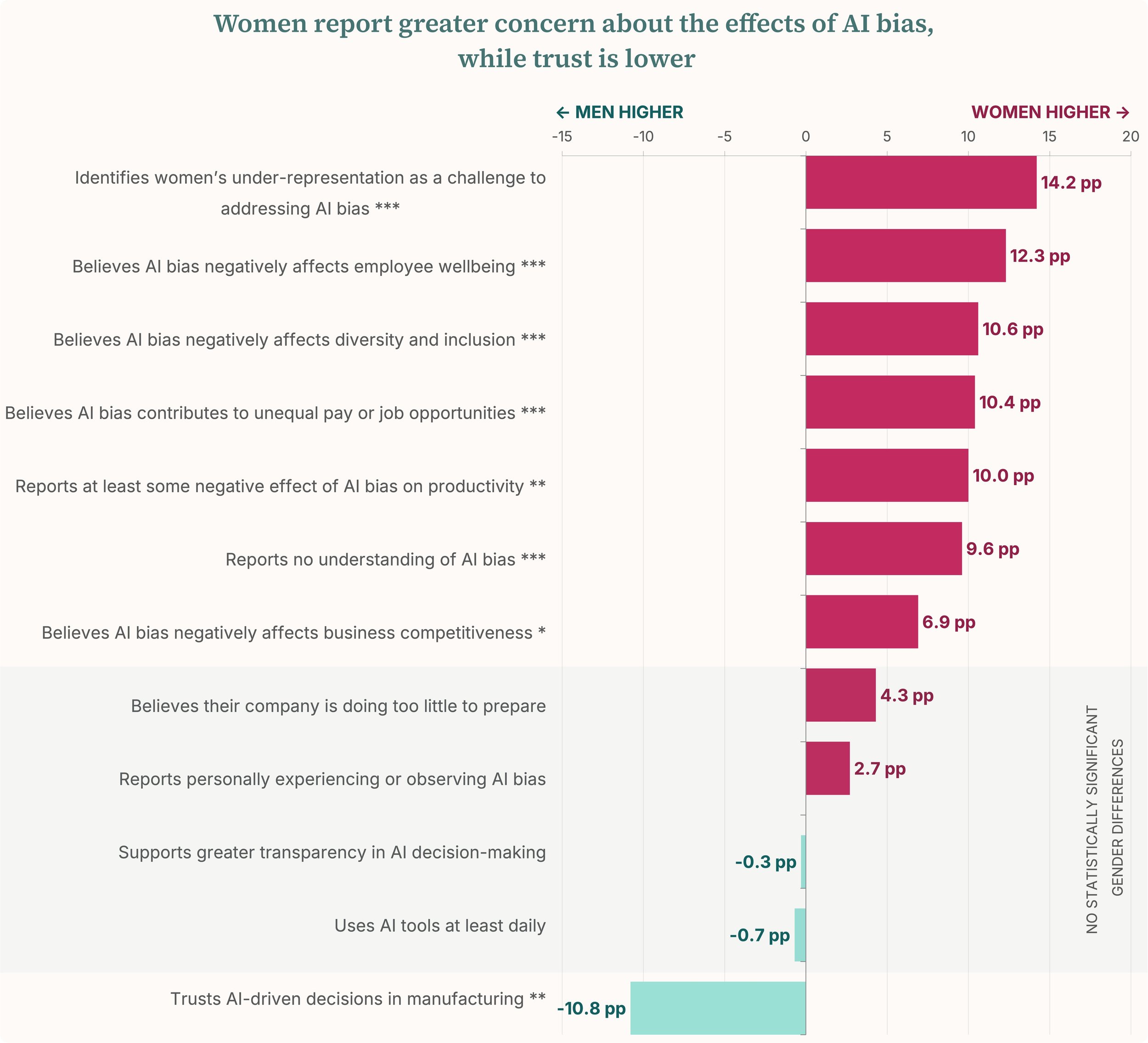
Figure 2: Selected gender differences in perceptions of AI bias across key indicators
Note: Based on up to 886 respondents (550 men and 336 women). Bars show the percentage point difference between women and men in the proportion selecting the specified response or combined response categories. Positive values indicate a higher proportion among women; negative values indicate a higher proportion among men. The representation item was part of a multiple-response question. Statistical significance is based on chi-square tests with Yates’ correction: * p < 0.05, ** p < 0.01, *** p < 0.001. Items without stars show no statistically significant gender difference.
Source: Roupakia, Z. (2026). AI Bias in Manufacturing: A UK Workforce Survey. Noetic AI.
The report sets out five areas of action for organisations and policymakers: knowing where AI is shaping work and governing it; directing training to the roles where work is changing; testing AI systems for fair treatment; involving women and affected workers in adoption and job redesign; and tracking whether the benefits of AI are shared fairly.
Zoi Roupakia, Founder and Director of Noetic AI, said: "It's important to be clear that this report does not conclude that AI is taking women's jobs in manufacturing. Rather, it shows that women are disproportionately represented in some of the occupations most exposed to AI-driven task change, which could affect how they work. The most exposed roles are not on the production line: they are in administrative and customer service occupational groups where women outnumber men in UK manufacturing.
"Adoption still remains at an early stage, so the decisions that will determine whether AI widens or narrows opportunities for women are being made now, in how employers introduce the technology, redesign work and govern these systems. To avoid 'the default setting', we must ensure that AI adoption widens access to skills, fair treatment, participation and progression, rather than reproducing existing inequalities in the structure of work."
Teresa Arbuckle, Regional Managing Director of Beko UK & Ireland, said: "AI, used in partnership with human expertise and decision making, presents a significant opportunity to help manufacturing businesses become more efficient and productive. But this should not be at the cost of greater representation. We need to take everyone on this journey, regardless of gender, and we want to see more women enter manufacturing businesses and continue to progress into leadership and specialist roles. This report sets out a blueprint for how we can achieve both goals, without one undermining the other."
"As the world of work changes, and we explore how AI can support our business and customers, we are continuing to strengthen the policies, training and support available to our people, ensuring those most affected by change are considered and are able to benefit from the opportunities it creates. It is essential that the progress we have made on women's representation is embedded into the new processes and technologies that we adopt."
Contact: Zoi Roupakia, zoi.roupakia@noeticai.co